


Find True Duplicate Files, Not Just Files with the Same Name
When manually managing duplicate files on your computer, you may consider the file name as an easy indicator. However, it may not always be a reliable approach. What truly matters is the file content. Cisdem Duplicate Finder is a duplicate file finder that helps you accurately and quickly find duplicate files based on file content among photos, videos, music, documents, and more.
What Makes Files Duplicates?
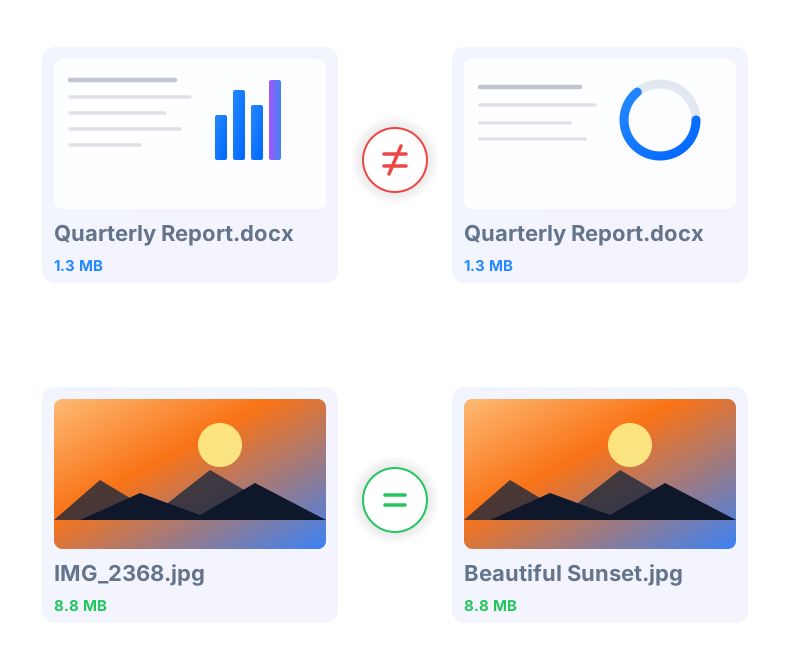
Strictly speaking, if two or more files are exactly the same, regardless of file names, they are a group of duplicates. The bottom line is that duplicate files share identical file content. Changing a file's name doesn't change its content.
Identifying duplicate files by name may result in mistaking unique files for duplicates. For example, you have two important documents that are different, and they share the same name and size. You certainly don't want to delete any of them.
When it comes to duplicate files with different names, relying only on the name will fail to find them, so they will continue to take up your storage space.
How the Tool Identifies Duplicate Files
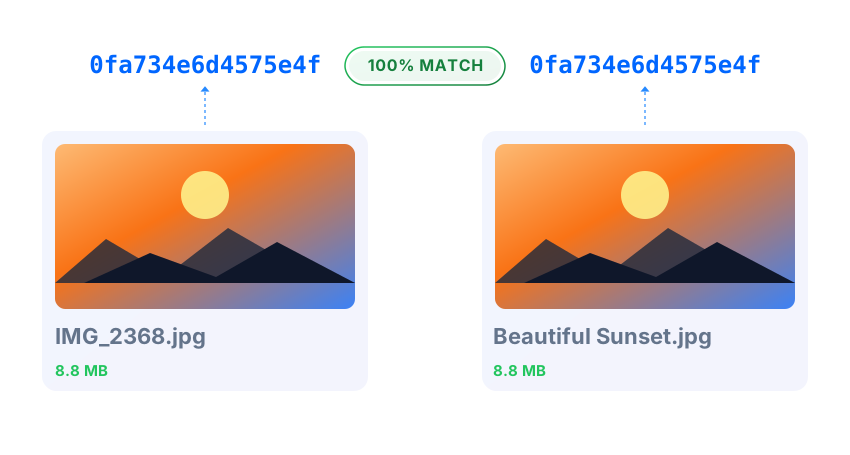
This duplicate file finder accurately and quickly finds duplicate files with the same or different names. It works based on file content comparison powered by a technology called hashing.
For each file to be compared, the tool generates a unique hash value (e.g., 0fa734e6d4575e4f) based on the file content, using a hashing algorithm called XXH3. The same file content returns an identical hash value, and even the editing of a single letter in a document can result in different hash values. Then, the tool compares these hash values to accurately identify duplicates.
Accuracy doesn't sacrifice speed. XXH3 is fast, capable of handling gigabytes of files in seconds. The tool also organizes files in advance to help improve hashing efficiency.
Identify Duplicates in Various File Types and Formats
Supporting various file types and formats, this tool can find duplicate images, audio, documents, and more, helping you clean up photo collections, music libraries, work documents, and so on. For efficiency, you can set the tool to, for example, scan for duplicate videos only, or exclude PNG files when scanning. In addition, the tool can find duplicate folders.
 Images
JPG, JPEG, TIFF, TIF, GIF, PNG, WEBP, HEIC, HEIF, BMP, DIB, SVG, PSD, AI, RAW, CR2, NEF, NRW, ORF, RAF, RW2, and more
 Videos
MP4, MOV, WMV, AVI, FLV, F4V, MKV, WEBM, VOB, OGV, HEVC, MTS, M2TS, TS, RM, RMVB, M4V, 3GP, BRAW, and more
 Audio
MP3, WAV, WMA, AAC, AIFF, ALAC, FLAC, M4A, OGG, OGA, AC3, M4R, MPC, WV, AAX, AMR, APE, MID, and more
 Documents
DOC, DOCX, XLS, XLSX, CSV, TXT, RTF, MD, PDF, PPT, PPTX, DJVU, HTML, HTM, XML, PAGES, ODT, NUMBERS, ODP, ODS, and more
 Other
ZIP, ZIPX, RAR, TAR, DMG, EXE, APK, PKG, MPKG, GZ, 7Z, EPUB, AZW3, FB2, VCF, KEY, JSON, and more
Scan for Duplicate Files Across Your Storage
No matter where you store your files, duplicate files can exist, probably caused by repeated imports or downloads of files, transferring files by copying and pasting instead of moving, or extra backups. Supporting various storage types, such as PC's internal drive and external devices, the tool can deeply scan your added locations for those files, helping you declutter and free up storage.

Scan Your Computer, External Storage, and Cloud Drives
- Windows PC & Mac: The tool can find duplicate files on Windows or Mac computers, whether the device uses an SSD or HDD internal drive. For Mac, the tool supports working with the Apple Photos app in addition to folders and drives (volumes).
- External storage: It also supports external storage devices connected to a computer, such as external HDDs or SSDs, SD cards, and USB flash drives.
- OneDrive & Dropbox: The tool on Windows can directly scan an entire OneDrive or Dropbox account (or specific folders within it) online, and this support on Mac is coming soon. For other cloud drive services, you can first sync files to computer using a service's desktop client.

Scan Within or Across Locations
This tool supports scanning within one folder/drive or across multiple locations at a time, so it can scan deeply in your storage, no matter how deeply duplicate files hide, such as within multiple layers of folders or scattered around your computer. It can even scan between internal and external storage. In addition, you can exclude specific folders from your scan, such as a backup folder.
Review and Bulk Remove Duplicate Files, with Automatic Selection Rules
Finding duplicate files is just the first part of your cleanup journey. This tool helps you easily and reliably delete duplicate files by listing scan results for convenient review, automatically selecting duplicates for bulk deletion based on your needs, and moving duplicates to the Recycle Bin (Windows) or Trash (Mac) for easy restoring. Not a single file will be deleted without confirmation from you.
Review Duplicate Files before Removal
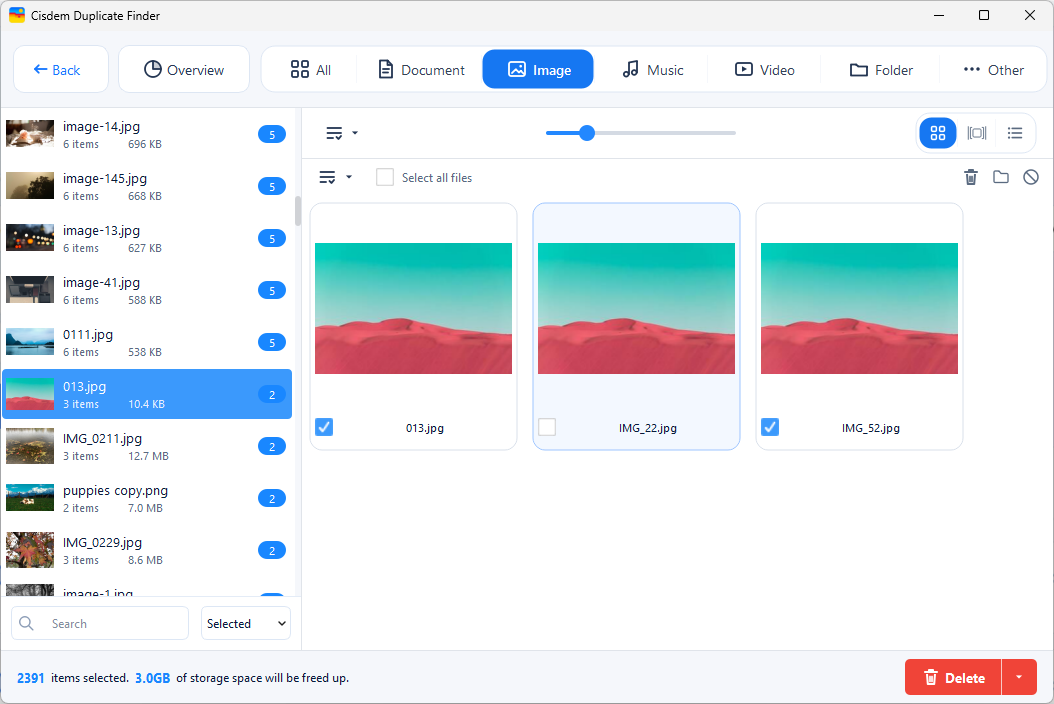
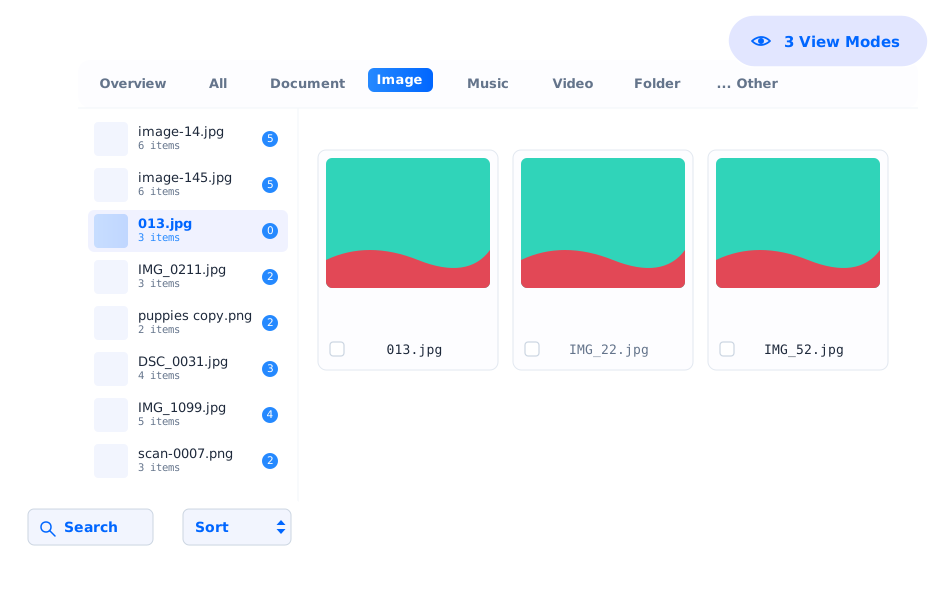
When a scan is done, the tool will display found duplicate files in the results window for you to view in one place or by file type, such as Image, Document, Music, and Video.
It provides three view modes, helping you easily preview duplicate files side by side and see file information, such as name, size, and location.
To help you organize scan results, the tool offers a few tools, such as searching, sorting by name or size, and opening a file in File Explorer (Windows) or Trash (Mac).
Automatically Select Duplicates for Deletion as Needed
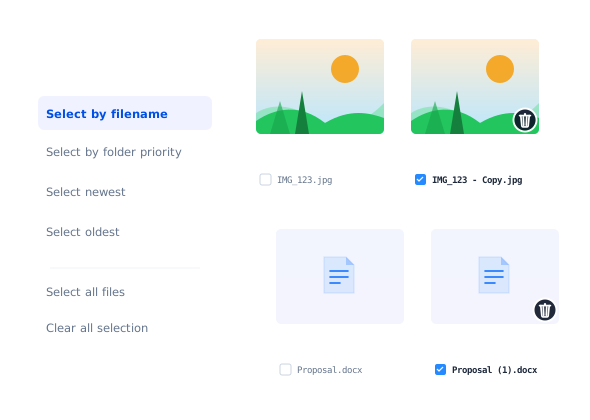
Upon the completion of a scan, in each group of duplicate files, the tool automatically selects all but one file for deletion based on your desired selection rule.
The tool provides multiple rules for you to choose from. In settings, you can choose a rule that applies to future scans, affecting all groups. In the results window, you can temporarily choose a rule for the current scan only, affecting groups of your choice. Also, you can manually select or deselect files.
Consider names like "backup", "copy", and "(1)" when selecting files.
Prioritize deleting duplicates in your chosen folder when handling multiple locations.
Keep the oldest file in each group, and select the rest for deletion.
Keep the newest file in each group, and select the rest for deletion.
Delete Duplicate Files in 3 Methods
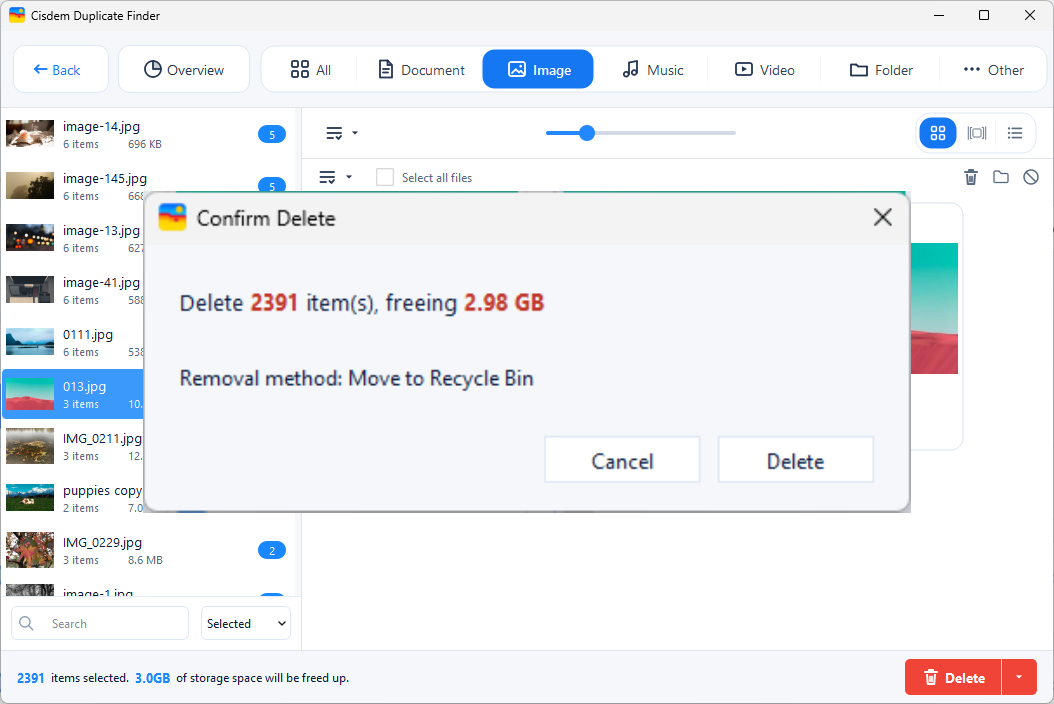
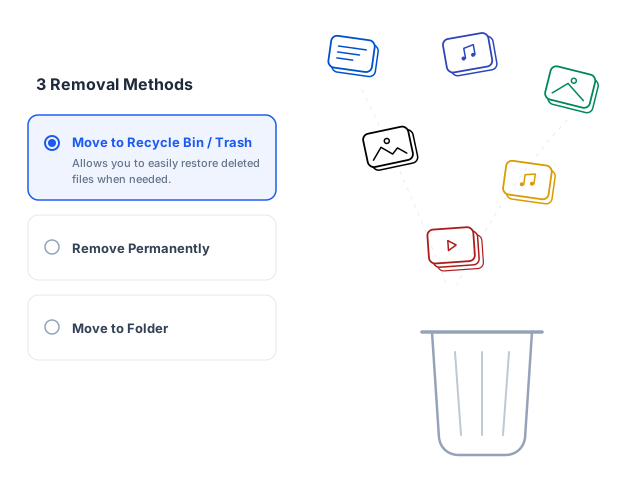
When you are sure that unwanted duplicates are selected, you can delete them by clicking the Delete button and confirming the deletion. The tool provides three removal methods: Move to Recycle Bin (Windows) or Trash (Mac), Remove Permanently, and Move to Folder. Sticking to the default method allows you to easily restore deleted files when needed, helping ensure the safety of your files.
Duplicates deleted from your OneDrive/Dropbox or the Apple Photos app on Mac will go to the cloud drive service's built-in recycle bin or the app's Recently Deleted album respectively.
From accurate duplicate detection and results review to customizable selections and safe removal, this tool helps you get rid of duplicate files with confidence.
Frequently Asked Questions
They are files that are exactly identical, without considering their file names.
Different tools may use different methods, such as comparing files by content using hashing, or comparing files by name and size.
Yes, you can add different locations to scan simultaneously.
Yes, you can. Just go to the tool's settings, open the Duplicate Files tab, choose the Select by folder priority rule, add this specific folder, and then set the priority value to 1.
It is safe to delete duplicate files in your personal folders, such as Pictures, Documents, Downloads, and your custom folders, as long as you are sure you don't need them anymore. However, it's not recommended to delete duplicates found in system folders and files.
To help keep your files safe, Cisdem Duplicate Finder displays a warning if you try to scan the entire C: drive (which contains system folders and files), allows you to exclude folders, and automatically skips system hidden files.
3 Steps to Clean up Duplicate Files in Your Storage

Step 1. Scan
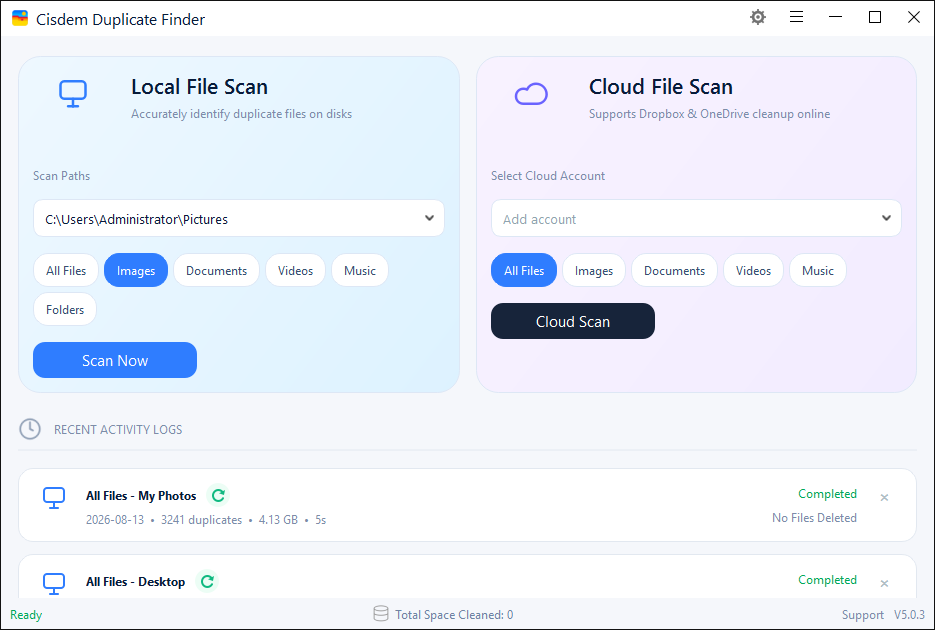
Add one or more folders/drives, or a cloud drive account. Then, click the Scan button.

Step 2. Review
The results window lists found duplicate files for you to view, preview, sort, and search.

Step 3. Delete
Select unwanted duplicate files with the help of automatic selection rules along with manual adjustments if needed. Click Delete, then confirm the deletion.