


How to Recover Unsaved After Effects File After Crash (6 Ways)
 4.2K
4.2K
 0
0




Data Recovery
Recover Deleted After Effects File Effortlessly


Adobe After Effects (AE) is often used in the post-production process of films, video games and televisions. However, After Effects not responding is quite common, especially when we work on a large project. Then how to save when After Effects not responding, and how to recover unsaved After Effects file after crash?
In this post, we round up all the possible solutions for you, which are applicable for any After Effects versions, including V26, V25, V24, ealier CC, CS and so on. Here we go.
Cisdem Data Recovery for Windows and Mac
Effortlessly Restore After Effects Projects
- Recover deleted, formatted and lost AEP files
- Also recover other Adobe proprietary file formats: AI, EPS, PSD, PDF, DNG, INDD, etc.
- Retrieve After Effects files from internal and external storage device, including hard drive, USB, etc.
- Restore various video files: MP4, MOV, AVI, FLV, MKV, WMV, WEBM, etc.
- Support recovery of 1000+ file types: videos, photos, documents, emails, archives, bookmarks, etc.
- Repair corrupted photos, videos and office documents
- Recover unsaved Word, Excel, Powerpoint files as well
- Support NAS, Linux, crashed PC/Mac recovery
 Free Download Windows 11/10/8/7
 Free Download macOS 10.15 or later
Part 1. After Effects Not Responding, How to Save?
If you edit projects in Adobe After Effects, you have probably at some point seen the symbol known as spinning wheel of death. This “not responding” error can be triggered by myriads of reasons, but here are the most common ones:
- High CPU/GPU load caused by complex effects, 3D rending or caching, high-resolution large footage, etc.
- Repeated edits onto the project cause hangs
- Not enough RAM
- Insufficient storage space
- Background process consumes too much memory or disk resources
- Problematic footage
- Conflicts from 3rd-party plugins
And to save After Effects files when not responding, here are the easy fixes before force quitting After Effects:
- Use shortcut Ctrl + S on Windows or Command + S on Mac to save manually
- Wait for a few more minutes to let the program process, render or cache completely
- Quit other apps that use high CPU, for example, other Adobe apps
- Delete unwanted documents and apps on your device to free up space
If these solutions don’t work in your case, you can restart After Effects, then refer to the methods in Part 2 to restore unsaved After Effects files after crash.
Part 2. How to Recover Unsaved After Effects File After Crash?
People are prone to get an unsaved AEP file when After Effects crashes or computer fails abruptly. If you’re finding yourself in this position right now, here comes the right part. 6 easy methods to recover unsaved projects in After Effects are going to be laid out for your information.
1# Recover via AutoSave Feature
There is a built-in backup feature called AutoSave, which will automatically save the changes we have made to our After Effects projects at specific intervals, to reduce the chance of data loss. In other words, After Effects can auto save your files without clicking on Save button if you have enabled this feature. All you need to recover the unsaved project, is to open the app and save your file, just as follows.
- Close After Effects if it’s open. Otherwise, launch it again.
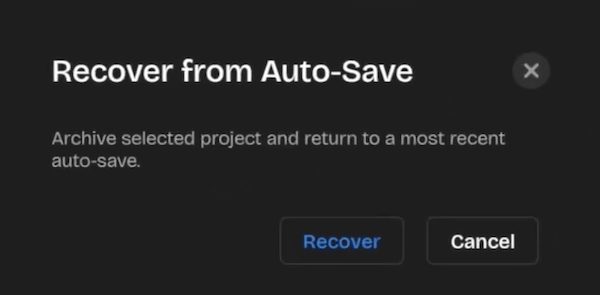
- AutoSave will detect an unsaved file and a recovery prompt will appear. Click Recover.
![recover via autosave]()
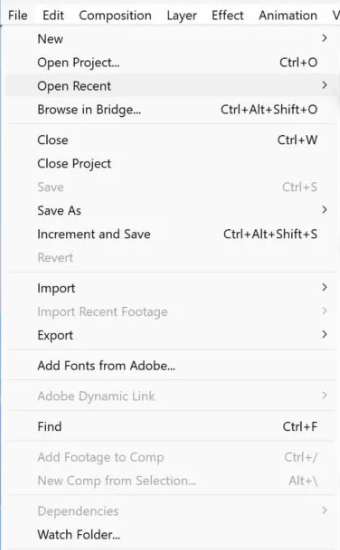
- Your unsaved project will be loaded in After Effects, go to File > Save As, save the recovered project to a safe location.
![after effects save as]()
2# Recover from After Effects Backup Location
This option is also associated with After Effects AutoSave feature. If the unsaved project isn’t auto detected nor opened when Adobe AE relaunched, take an attempt to manually find the auto save folder. Since AE AutoSave feature is capable of saving all backups automatically into a selected location. See below for how to achieve it.
- Run After Effects on your computer.
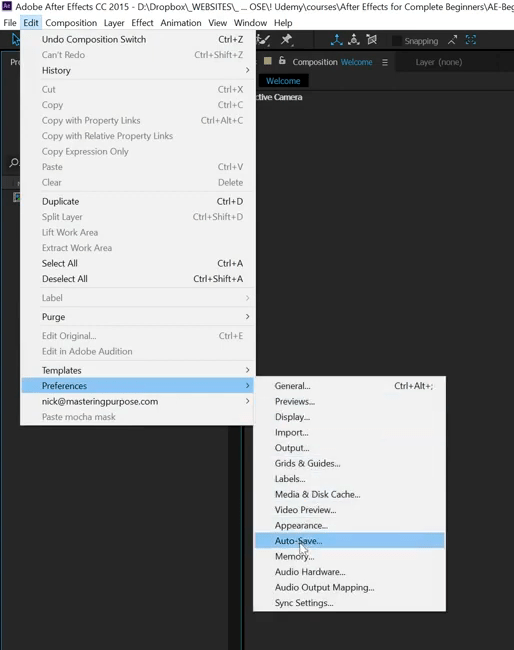
- Click Edit at the top-left menu > Preferences > Auto-Save.
![recover from ae backup 01]()
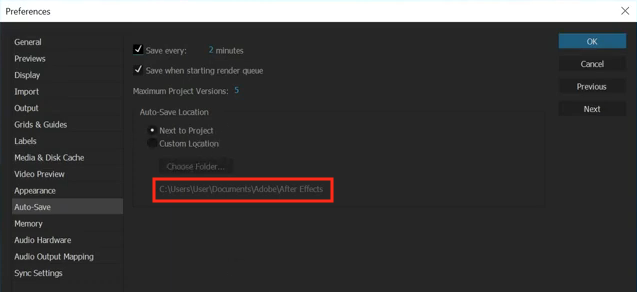
- Check the Auto-Save Location on your device. On Windows --- C:\Users\[Your Username]\Documents\Adobe\After Effects [Your Version]\Autosave. On macOS --- /Users/UserName/Documents/Adobe/After Effects
![recover from ae backup 02]()
- Exit AE and go to the folder location found in step 3.
- Select the latest saved version of your After Effects project file, open it in Adobe AE and save or expert as you need.
![recover from autosave]()

3# Recover by Opening Recent Files
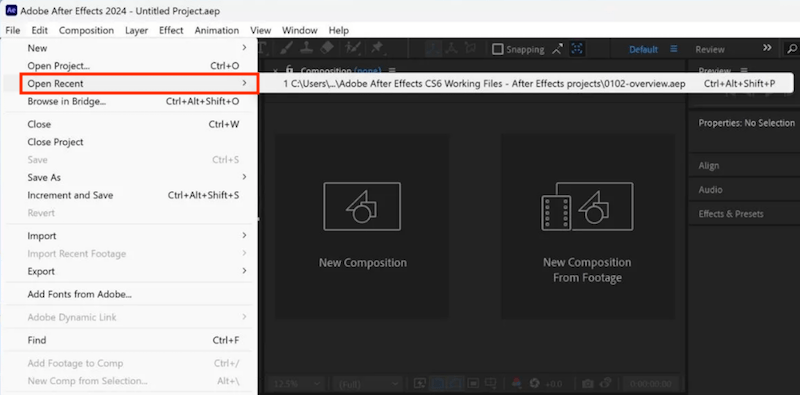
AutoSave feature not enabled? Don’t worry. Another pretty straightforward way to recover lost After Effects projects is opening recent files. Once you closed a project without saving or AE quit unexpectedly, it's probable to find your unsaved AEP file from the list of recent files. Bear in mind that this solution is feasible only if you have edited that project fairly recently. Otherwise, skip this tutorial and proceed to other tips.
- Open Adobe After Effects, navigate to File > Open Recent.
![open recent files]()
- From the list of recently closed AEP files, select the one that were not saved.
- Open and save the selected file in After Effects.
4# Recover from Temporary Files
Adobe AE also generates temporary files during your editing process. So the fourth method to restore unsaved projects in After Effects is checking the Temp folder in AE directory, and see if any temporary AEP files exist. These temporary files may not contain the complete project, they might just include partial or recent versions, but it is still useful for your file recovery.
Check out the instructions below on Windows.
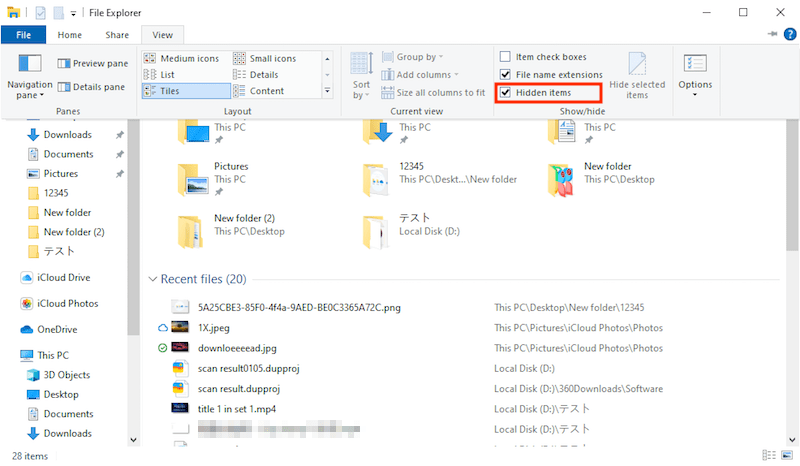
- Open File Explorer, go to View tab, tick the box of Hidden items to show hidden files and folders.
![recover with temp files 01]()
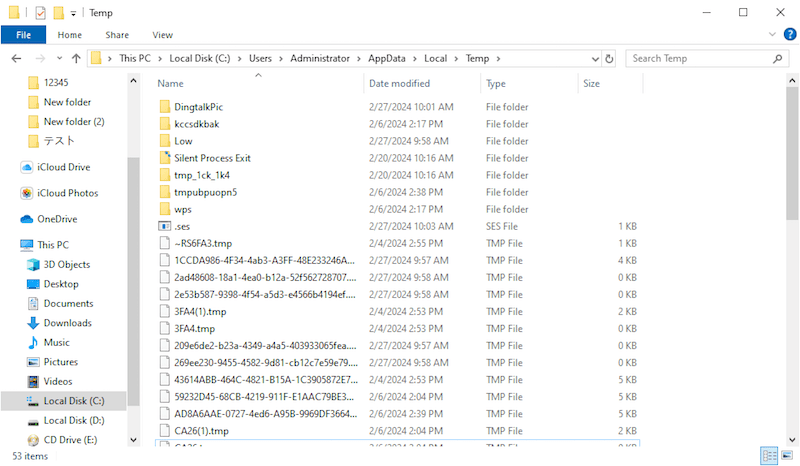
- Locate the Temp folder on your PC. Its default location is C:\Users\[Your Username]\AppData\Local\Temp.
![recover with temp files 02]()
- Look for the temporary files that have similar names of your AEP file.
- Select the most recent one according to the file’s date and size.
- Open and save it with After Effects to recover your project.
Check out the instructions below on macOS.
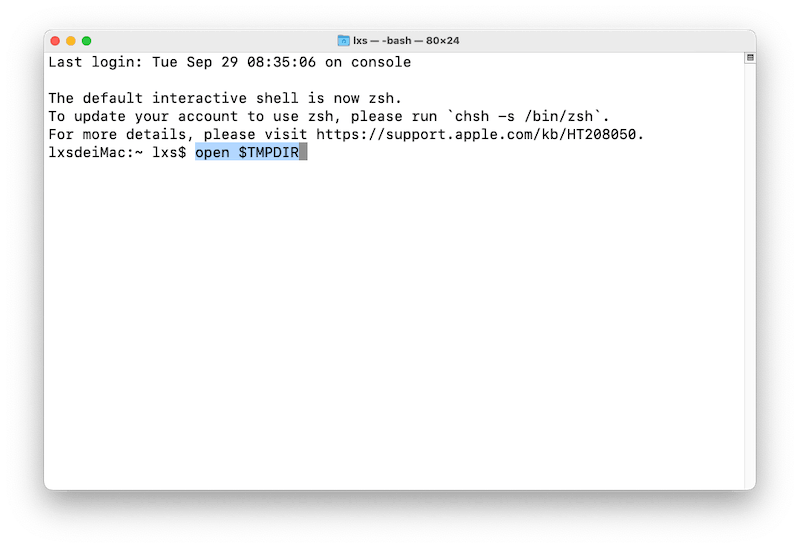
- Open Terminal app, then enter $TMPDIR and press Enter.
![mac temp 01]()
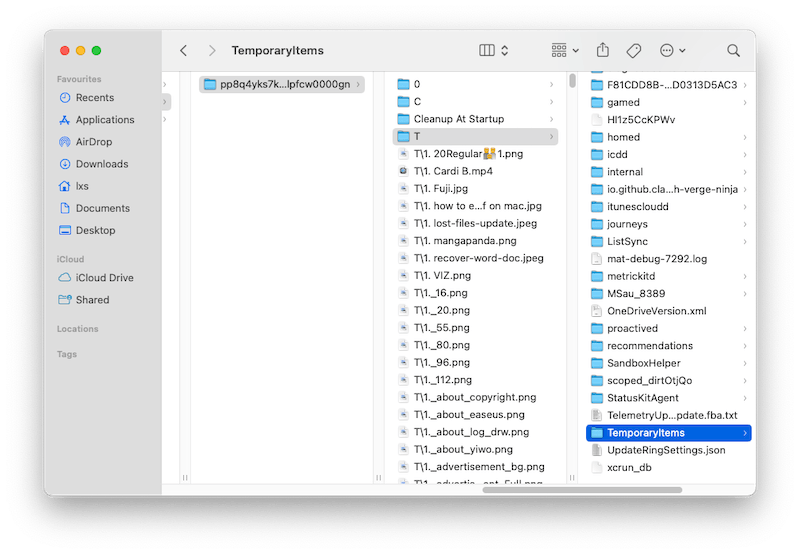
- Go to Temporaryitems folder and browse the files to locate the unsaved After Effect file.
![mac temp 02]()
- Then open the latest copy of the unsaved After Effect file in Adobe AE, and save it.
5# Recover from Adobe Creative Cloud
Suppose that you’re running CC (Creative Cloud) version of Adobe After Effects and have initialed the sync option, try your luck here. The unsaved AE projects might have been automatically backed up to the cloud storage already. This can be check via Adobe Creative Cloud app or website. Let’s look at the steps needed for recovering unsaved AE projects online.
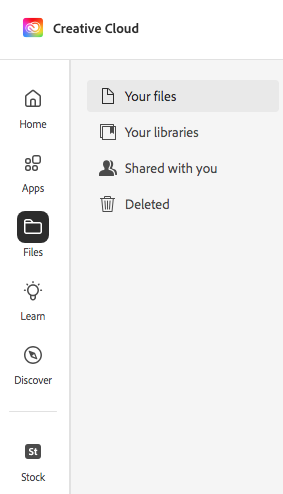
- Launch Adobe CC app on your computer, or visit Adobe CC assets page (https://assets.adobe.com/files) with your browser.
- Sign in with your Adobe account.
- Verify if the missing projects are present in files.
![adobe creative cloud]()
- If yes, select and download the file to your local folder.
![recover from adobe cloud 01]()
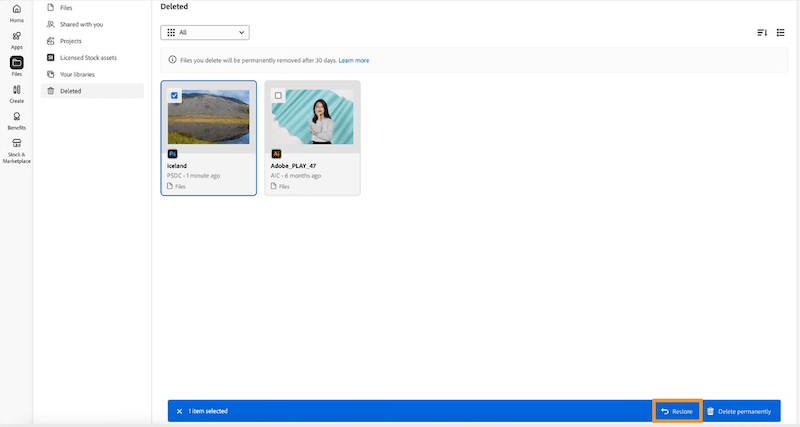
- (Optional) If you cannot find the copies, check the Deleted folder, select the file and click Restore.
![recover from adobe cloud 02]()

6# Use AEP File Recovery Software
So far, if you still can’t find your project file, you're strongly recommended to consider using AEP file recovery software. The key point is to select a reputable and reliable one, like Cisdem Data Recovery.
Among the multitude of data recovery tools available, Cisdem stands out as the leading choice due to its patented technology and advanced scan and recovery algorithms. With its exceptional support of file formats, in addition to After Effects projects, it can also retrieve a lot types of videos, images, audio, documents, archives and others.
Here are a couple more reasons to consider Cisdem Data Recovery:
- Recover files from Windows/Mac devices, HDD, SSD, USB drive, SD card, etc.
- Support any data loss scenarios: deletion, formatting, unsaved, system crash, partition loss, virus infection, etc.
- Retrieve 1000+ file types, covering virtually all Adobe proprietary formats
- Fix corrupted photos, videos and documents automatically
- Filter desired AEP files by name, date, keyword, tag and identifier
- Recover unsaved files in Word, Excel, PowerPoint, Keynote, Pages, Numbers, PSD, PDF, etc.
- Create disk backup image and recover later when necessary
- Support partition, crashed PC, Linux, Nas recovery
Steps to recover After Effects projects using Cisdem Data Recovery
- Download, install and launch Cisdem Data Recovery on your computer.
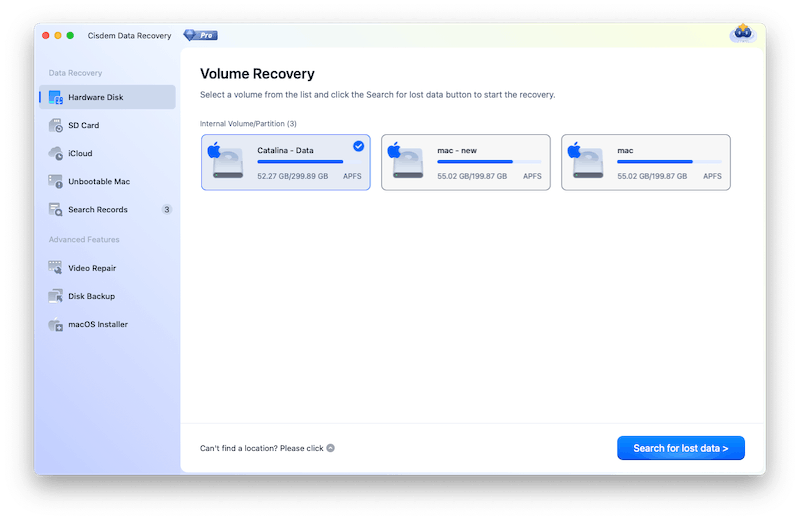
Free Download Windows 11/10/8/7 Free Download macOS 10.15 or later - Go to Hard Disk Recovery, select the location where you lost the AEP files, and click Search for Lost Data to start.
![recover aep files with cisdem 01]()
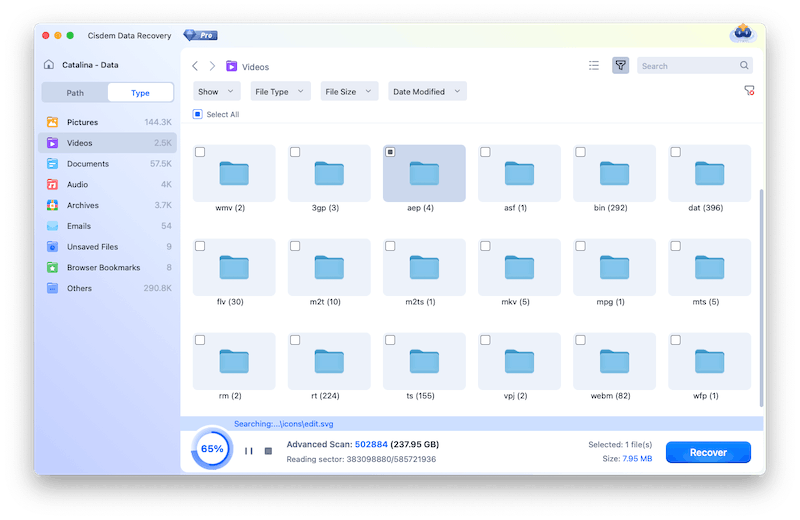
- During or after the scanning, go to Type > Videos > AEP. Also you can search with .aep/.aepx file extension, or use the Filter tool to quickly locate the lost After Effects files.
![recover aep files with cisdem 02]()
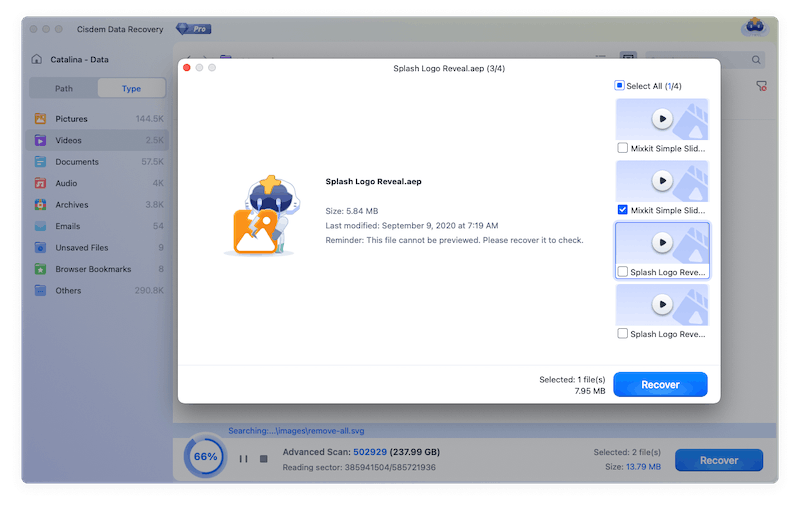
- Select the AEP files, check the file information and click Recover to retrieve them back to a new storage location.
![recover aep files with cisdem 03]()
Part 3. FAQs
1. Does Adobe After Effects Have AutoSave?
Yes, Adobe After Effects has Auto Save feature.
Like other Adobe tools, After Effects also has the feature to automatically save files without hitting Save button, when the program or your system crash suddenly. It is ON by default.
2. How to Enable AutoSave in After Effects?
For Windows users, open the program, go to Edit > Preferences > Auto -Save, set the auto-save interval and choose autosave location according to your need, then click OK. While for Mac, instead of going to Preferences, you should go to General option.
3. Where is After Effects AutoSave Location?
It can be different according to your setting. But generally, After Effects projects are auto saved here on Windows: C:\Users\[Your Username]\Documents\Adobe\After Effects [Your Version]\Autosave. On Mac: /Users/UserName/Documents/Adobe/After Effects.
4. How to recover deleted/lost After Effects projects?
- The first place you should check is Windows Recycle Bin or Mac Trash, they might be moved there for putting back.
- Search your computer
Sometimes the lost projects are just misplaced or mistakenly moved to a different location, rather than erased from your computer’s file system. In this case, use search function on your operating system, such as Mac Spotlight and Windows search box, to search for the file name or file extensions (.aep or .aepx for After Effects project files). If luckily, missing AEP files will come back within seconds. - Recover After Effects projects from backup
While most of us always ignore the importance of backup, it’s a truth that all kinds of data loss will be simply resolved with backup in hand. Assuming you have created any backups of the lost AEP files beforehand, head over to find and check the backup folder for easy recovery.
For Windows users, the AEP backup files could be accessed through File History, Previous Versions, or OneDrive platform. For macOS users, After Effects projects tend to be backed up via Time Machine or iCloud online storage. Alternatively, an external hard drive working correctly is the appropriate media to backup AEP files as well.
5. How to fix corrupted After Effects files?
After Effects crashing or other errors may not lead to project files unsaved or lost, but causes corruption instead. As the following picture shows, one of the major symptoms for a corrupted AEP file is disordered color lines on the footage screen. To deal with this common issue, we’re obliged to relink missing files in After Effects.
- Open the damaged AEP file.
- Click the search field in your Project window, search for “Missing Footage”.
- Right-click on the file you want to relink.
- First choose Reload Footage option.
- If it doesn’t work, click OK to confirm.
- Then right-click the file again, go to Replace Footage > File.
- Select the same file again to relink it, click Open.
Final Words
Whenever your After Effects becomes unresponsive, first wait patiently to check if the file can be saved. If not saved, try these 6 methods in our guide to retrieve your projects. That’s all for this post. We hope these solutions could be helpful and get your After Effects file back. If you readers have more ideas about After Effects project file recovery, comments are warmly welcome.

Zoey shows a great interest in what she does. Although not long with Cisdem, she has possessed a professional understanding of data recovery.

JK Tam is the lead developer at Cisdem, bringing over two decades of hands-on experience in cross-platform software development to the editorial team. He is now the lead technical approver for all articles related to Data Recovery and DVD Burner.