


How to Block Pop-Ups on Mac on Chrome, Safari and More
 13.3K
13.3K
 0
0


This article will show you how to block pop-ups on Mac easily in different ways.
Ads are everywhere online. Many of them take the form of pop-ups. A pop-up ad may open in the current browser window, a new window, or another tab. Pop-ups can be annoying. They interrupt your browsing experience. What’s worse, they may lead to malicious websites or trick you into downloading unwanted software.
Unless you are sure that a pop-up is legitimate, avoid interacting with it. Just close the tab or the window. Some pop-ups come with fake close buttons. Clicking such a button will open more pop-ups. Blocking pop-ups can help you get rid of the annoyances.
 Cisdem AppCrypt
The Best App to Block Websites on Mac
- Block distracting, inappropriate or any other websites or webpages
- Let you block all websites except the ones you allow
- Also lock apps with password
- Offer Schedule feature to block websites and lock apps at certain times
- Require password to quit or uninstall AppCrypt
- Help reduce digital distractions and improve productivity
- Help limit screen time
- Help protect your private apps
- Can be used for parental control
- Support macOS 10.15 or later
- Also available for Windows, iPhone and iPad, and Android


Method 1. Block pop-ups on Mac via browsers’ built-in pop-up blocking tools
The fact is that most web browsers today provide users with built-in tools to block pop-ups. This part will talk about the three most popular browsers on Mac: Google Chrome, Safari and Firefox.
How to block pop-ups on Mac in Chrome
1. On your Mac, open Chrome.
2. Click the three-dot icon in the top right corner. Choose Settings.
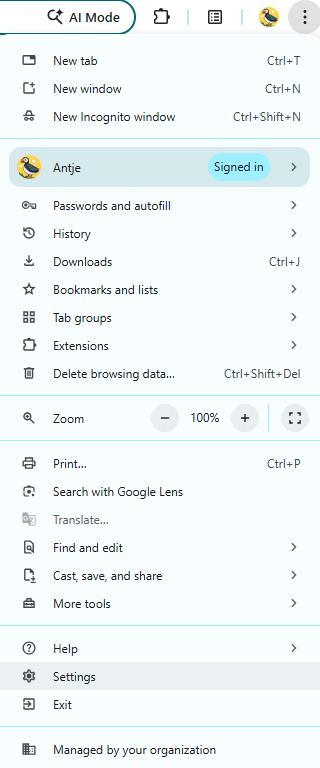
3. Select Privacy and security from the left sidebar. Select Site settings.
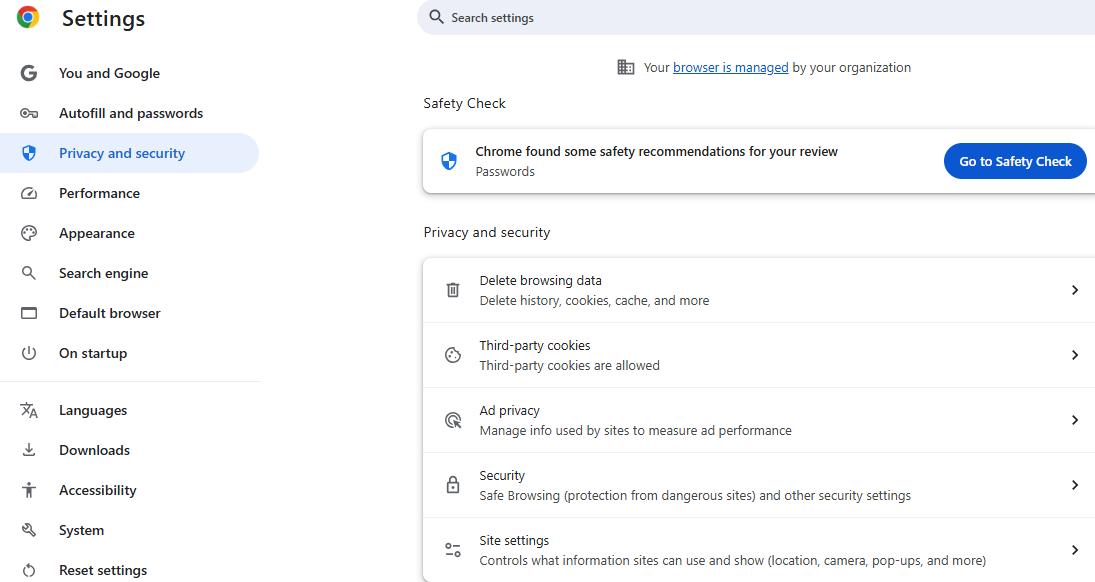
4. Scroll down to the Content section. Click Pop-ups and redirects.
5. Under Default behavior, select Don't allow sites to send pop-ups or use redirects.
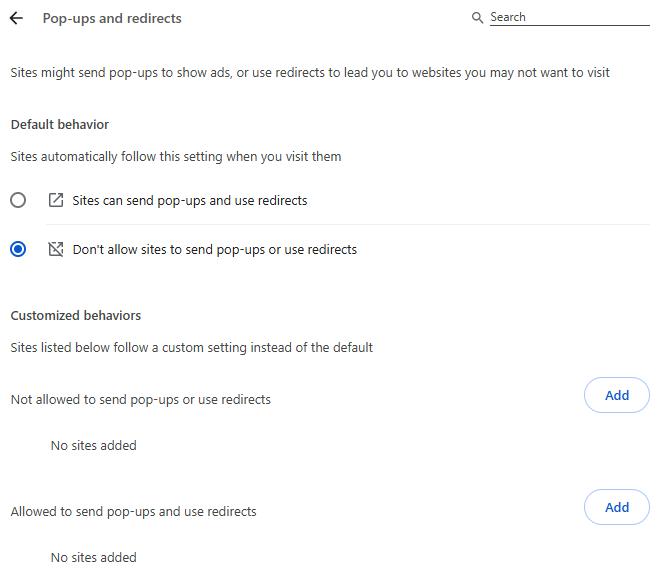
Once enabled, Chrome will block pop-ups from all websites by default.
Tip: If you want to allow pop-ups on specific websites, scroll to Customized behaviors. Add those sites to the “Allowed to send pop-ups and use redirects” section. This way, you can block most pop-ups in Chrome on Mac while still permitting them on trusted sites.
How to block pop-ups on Mac in Safari
1. On your MacBook Pro, MacBook Air or iMac, etc., open Safari.
2. Go to Safari > Preferences.
3. Under the Websites tab, click Pop-up Windows.
4. In the Allow pop-up windows on the websites below section, the currently open websites (if any) will be listed. You can block or allow pop-up windows for them individually.
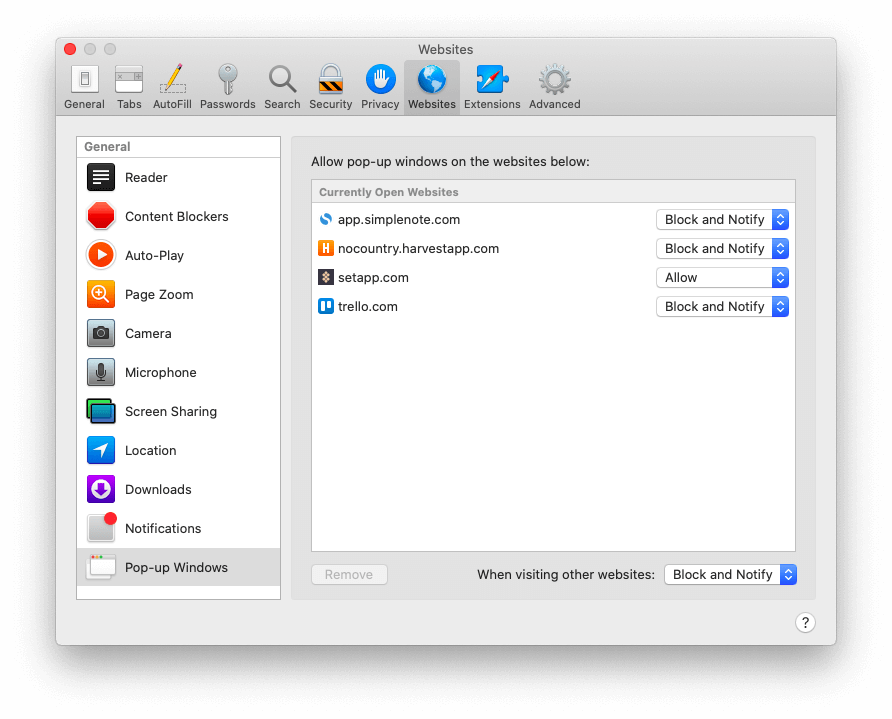
5. Go to When visiting other websites at the bottom. Choose Block or Block and Notify.
If you choose the Block and Notify option, when a pop-up window is blocked, Safari will let you know.
You can also easily handle pop-up windows in Safari on your iPad and iPhone in pretty much the same way.
To turn off pop-up blocker on Mac Safari, choose the option Allow in Step 5.
How to stop pop-ups on Mac in Firefox
1. On your Mac, open Firefox.
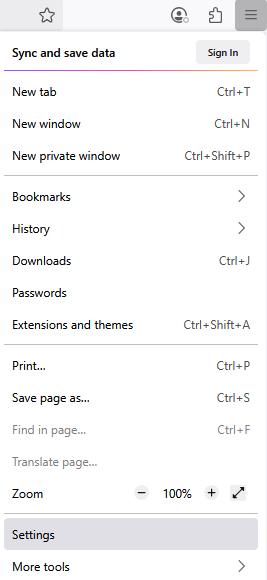
2. Click the three-line icon in the top right corner. Click Settings.
3. Click Privacy & Security from the left sidebar. Scroll down the window. Find Permissions.
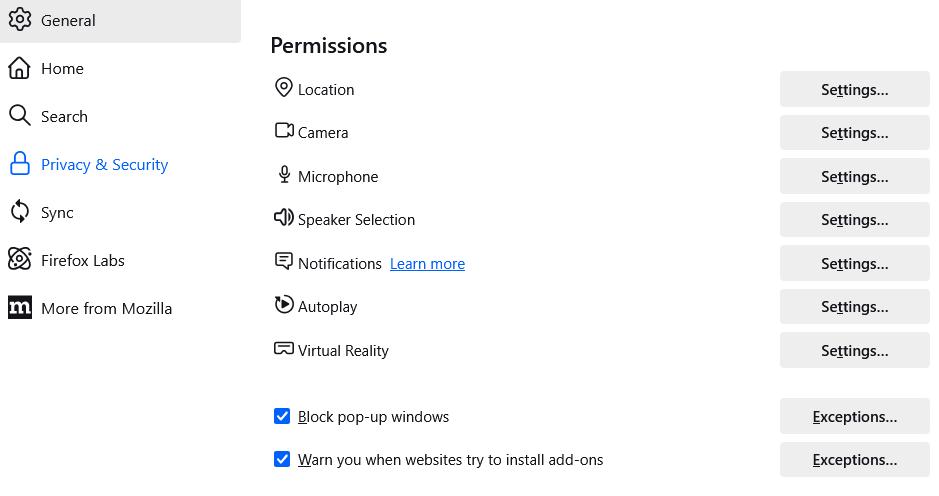
4. Check the box next to Block pop-up windows.
Tip: If you want to allow pop-ups in Firefox for certain websites, click the Exceptions button next to Block pop-up windows. Enter the URL in the “Address of website” box. Click Allow. Click Save Changes.
Method 2. How to block pop-ups on Mac via extensions
AdBlock (https://getadblock.com/) is one of the most popular and reliable browser extensions to block online ads, including pop-up ads. It offers a free version, which can meet your basic needs. You can also buy Adblock Premium for enhanced pop-up blocking and more customization options.
It's available for Chrome, Firefox, Safari, and Edge browsers.
1. Open your web browser. Go to the official site of AdBlock.
2. There, find a link to download this pop-up blocker for your browser or device.
3. Download and install the extension.
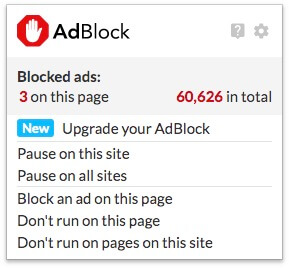
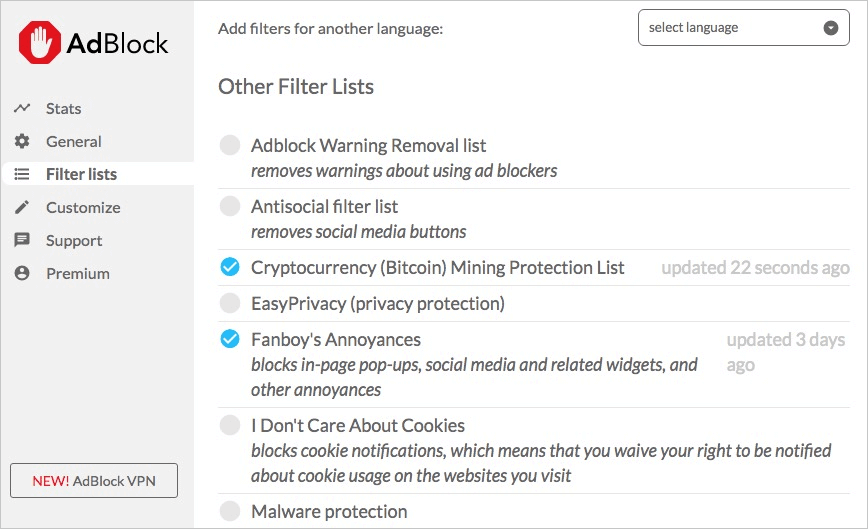
Once installed, it will immediately start working. This extension is easy to use and highly customizable. Click its icon in your browser toolbar. Click the settings icon, which will take you to the AdBlock Options page. In the sidebar, click Filter lists, and you will find a few filter lists. AdBlock works based on them and primarily on EasyList.
If there are still unwanted pop-ups, here's a tip that helps. In the Filter lists interface, under the Other Filter Lists section, check the box next to Fanboy's Annoyances.
Bonus tip: How to block unwanted websites on Mac
Just like unwanted pop-ups, unwanted websites are also something that we want to block. It’s easy to block or limit access to them using Cisdem AppCrypt, the best website blocker and app locker for Mac.
 Free Download
1. Download AppCrypt and install it.
2. When you open the app for the first time, you will need to set a password.

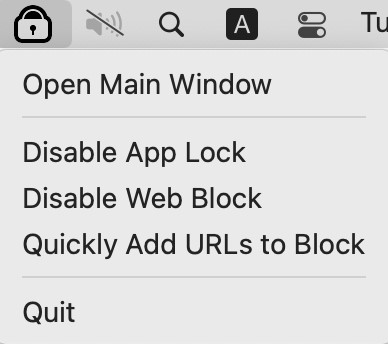
3. From the top menu bar, click the app's icon and click Open Main Window.
4. Go to the Web Block tab.
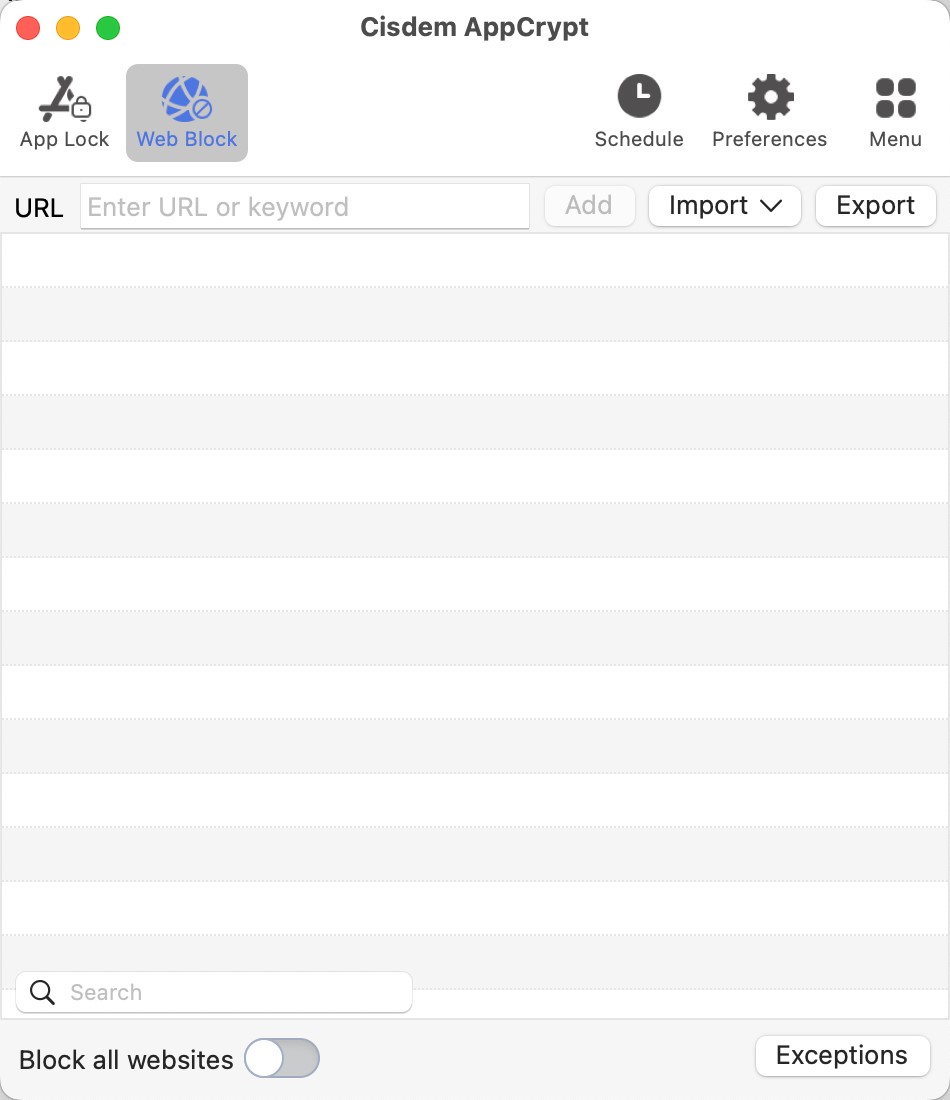
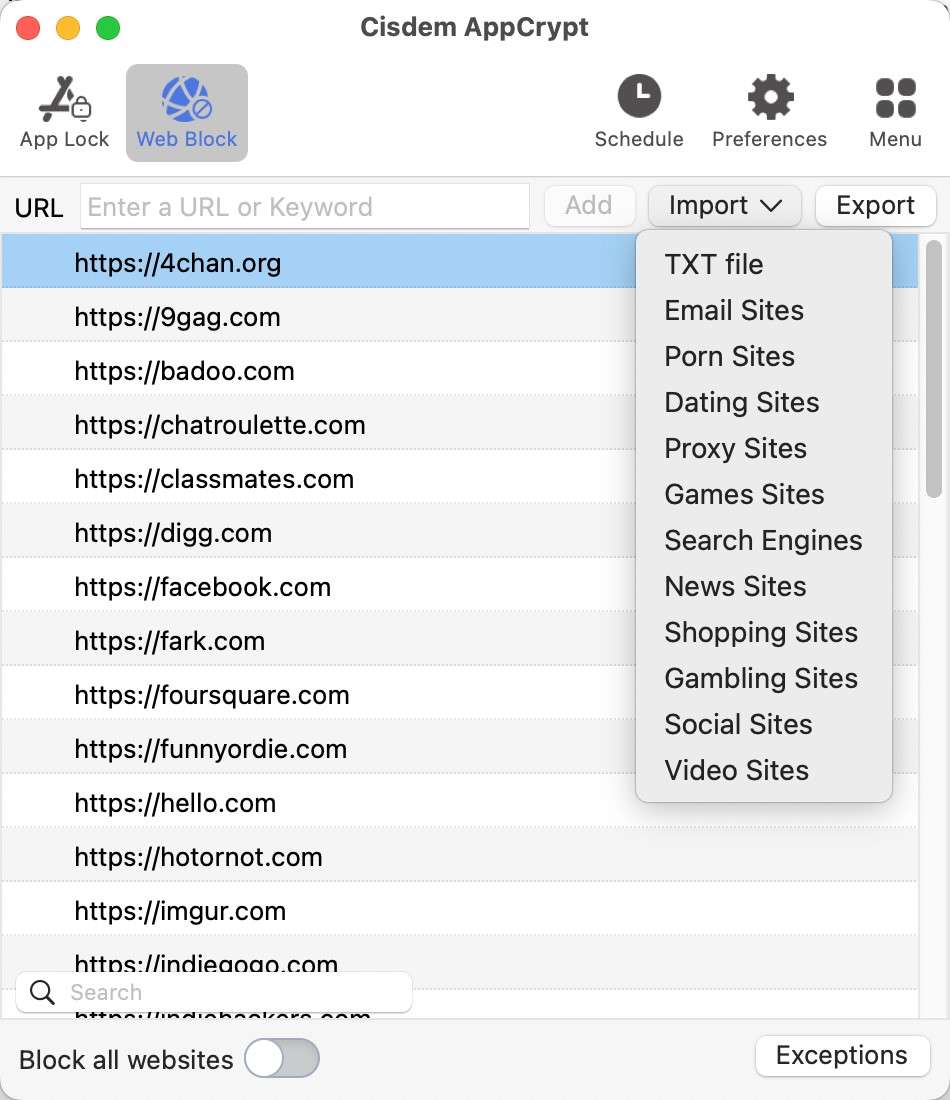
5. Enter the URL of the unwanted website. Click the Add button.
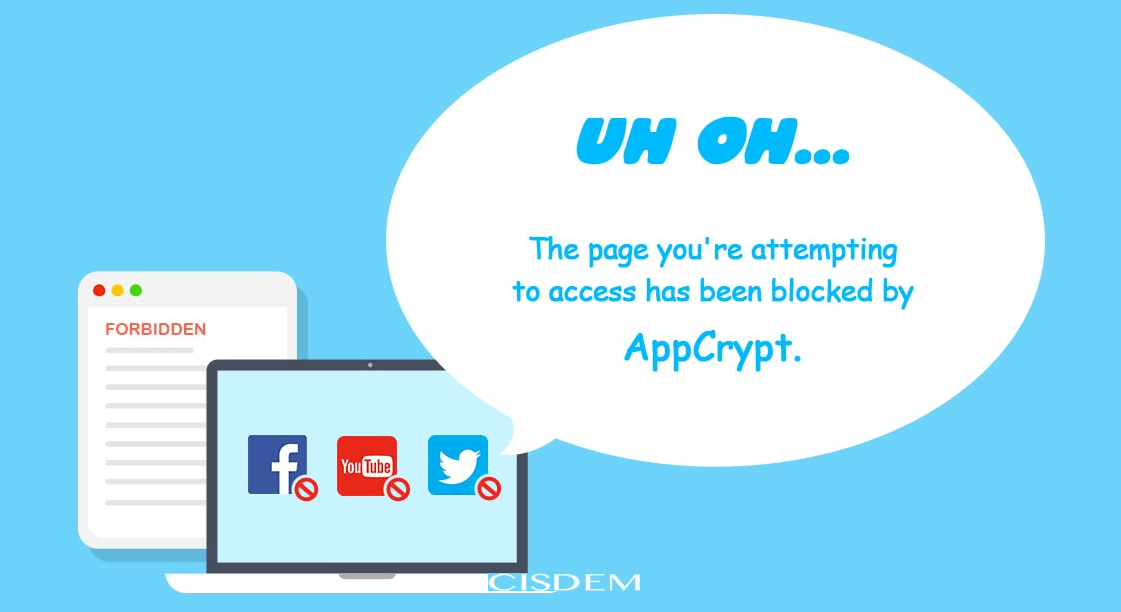
Once a website is blocked, when you try to open it, it won't open. And you will be presented with this image.
To remove it from the block list, select it in the Web Block window and click the minus icon.
Conclusion
This is how to block pop-ups on Mac. By stop annoying or malicious pop-ups, you can have a better and safer browsing experience. Regardless of the web browser you use, it should come with a built-in solution for pop-ups. If the built-in one is not useful enough, you can consider third-party tools such as AdBlock.

Norah Hayes likes to share her tips on how to improve focus and stay motivated at work. She believes it is essential to eliminate all online distractions during work hours.

Ethan Long joined Cisdem in 2015 as a developer and now serves as the editorial advisor for Cisdem AppCrypt. He actively tests and uses Cisdem AppCrypt and other screen-time management tools to ensure AppCrypt meets its promises in real-world scenarios.