


How to Use a Duplicate Folder Finder to Manage Duplicate Folders
 1.9K
1.9K
 1
1




Duplicate Folder Finder
Scan for duplicate folders and files


It's common to have duplicate folders on computers. Duplicate folders take up storage space and may cause disorganization or confusion. In this article, I will share the easiest method to find and remove duplicate folders and provide step-by-step instructions.
How a duplicate folder finder works
The easiest method to identify duplicate folders on a Windows PC or Mac is to use Cisdem Duplicate Finder - an AI-powered duplicate file and photo finder.
Cisdem Duplicate Finder automatically and accurately identifies duplicate folders by comparing individual files (by content, regardless of file names) within them. If two folders contain the same set of files, this app considers them duplicate folders (regardless of folder names). In other words, if the files in one folder are duplicates of the files in the other folder, the two folders are considered duplicates.
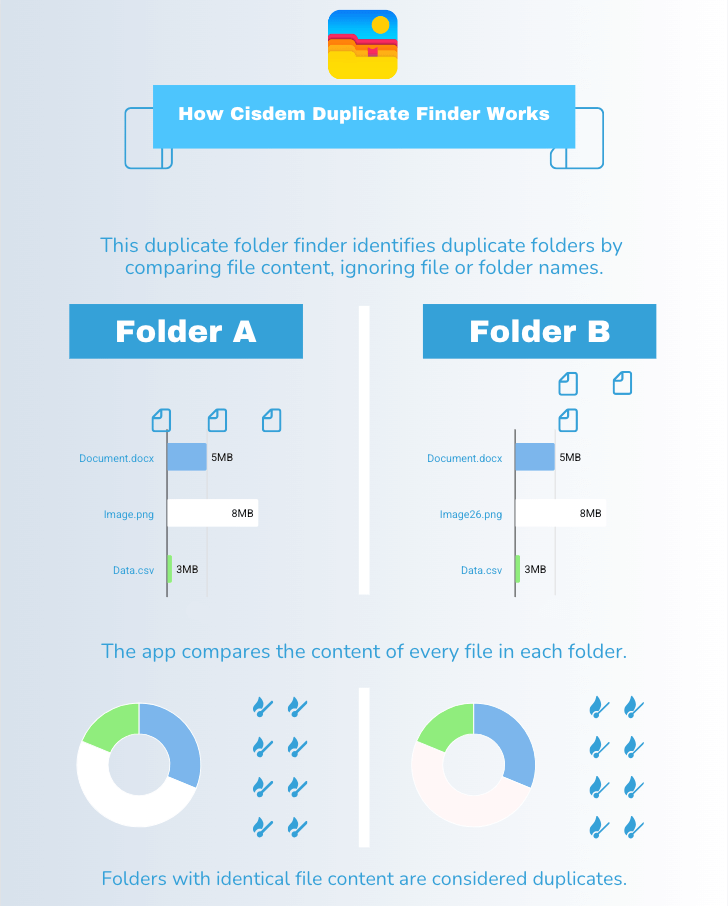
The app automates the identification, saving you from taking time and effort to manually compare the contents (i.e., files) of folders.
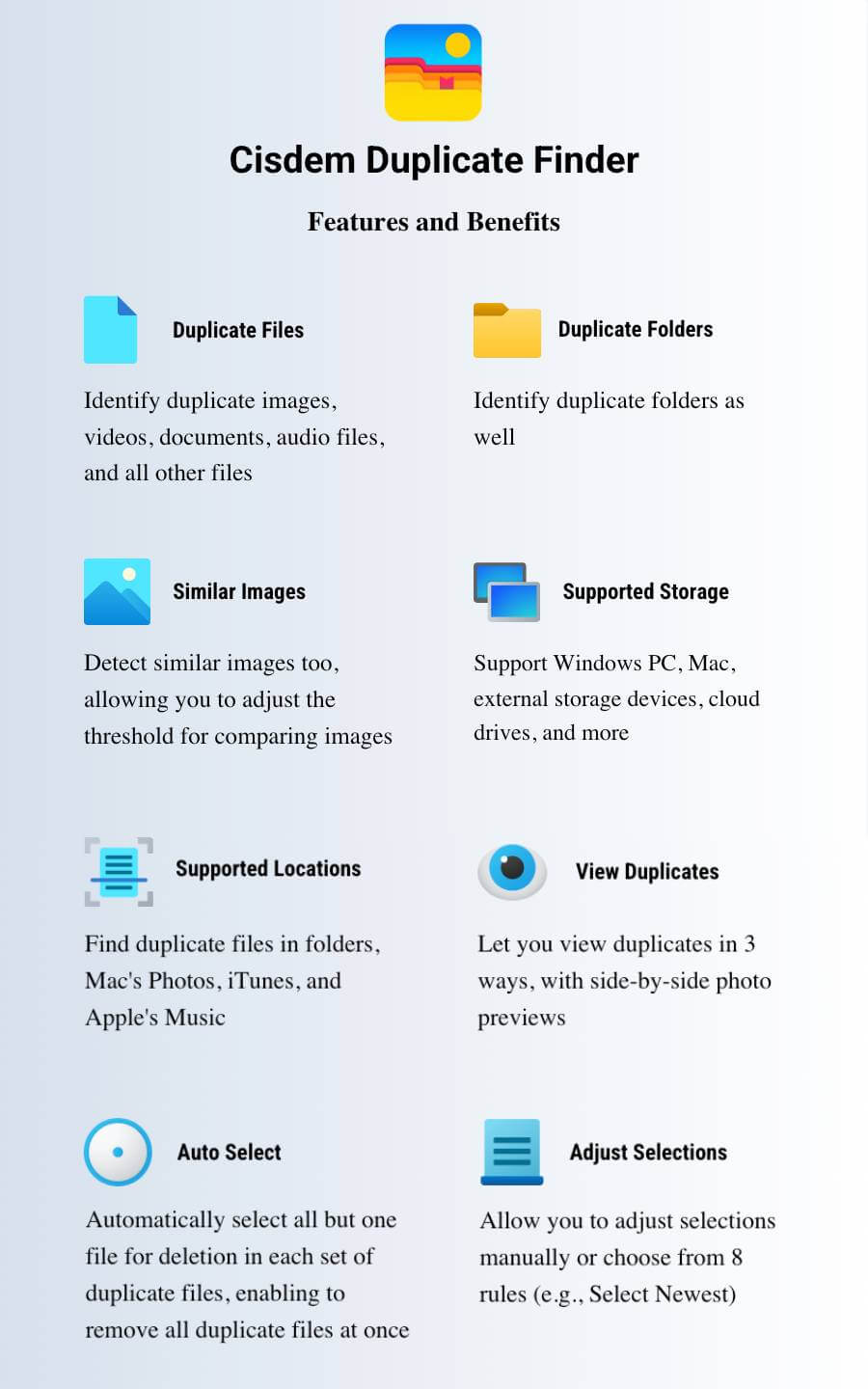
Steps to find and delete duplicate folders
Step-by-step instructions
Step 1. Install this duplicate folder finder
Download and install Cisdem Duplicate Finder on your Windows PC or Mac. Open the app.
 Free Download Windows 10 or later
  Free Download macOS 10.11 or later
Step 2. Add locations to scan
Under Local File Scan, add the folders or drives (such as your D: drive or external hard drive). You can also drag and drop folders or drives directly into the scan area. Click Scan Now.
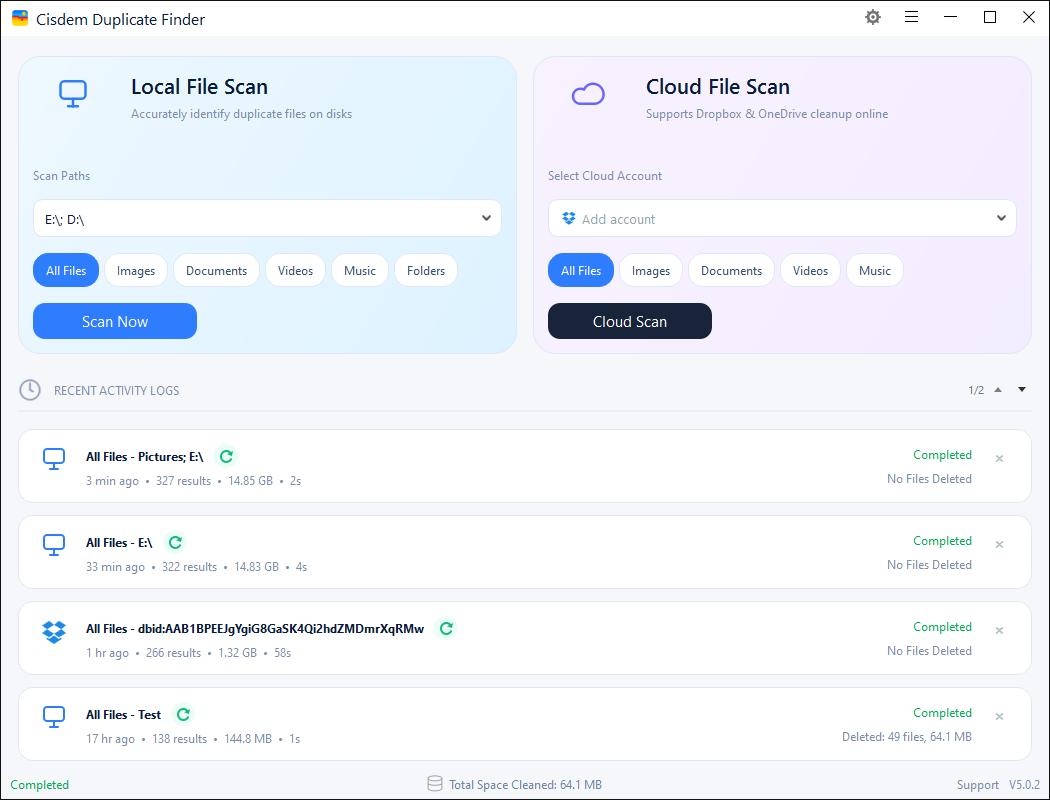
Step 3. Examine scan results
When the scan is complete, you will be presented with a results window. Choose the Folder tab to view the duplicated folders that have been found.
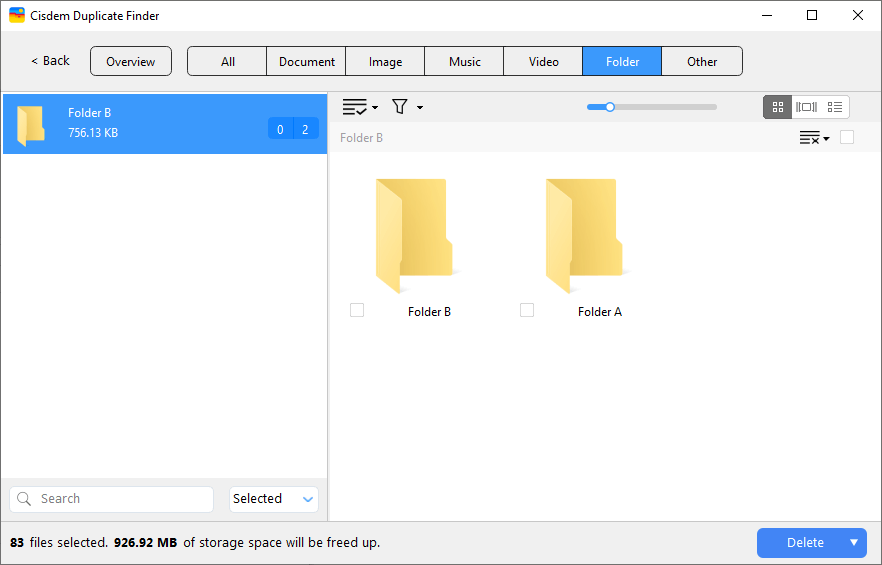
If you want, you can switch to the second view mode and click the Open button next to a folder. This will allow you to open the folder in File Explorer (Windows) or Mac (Finder) so you can have a close look at it.
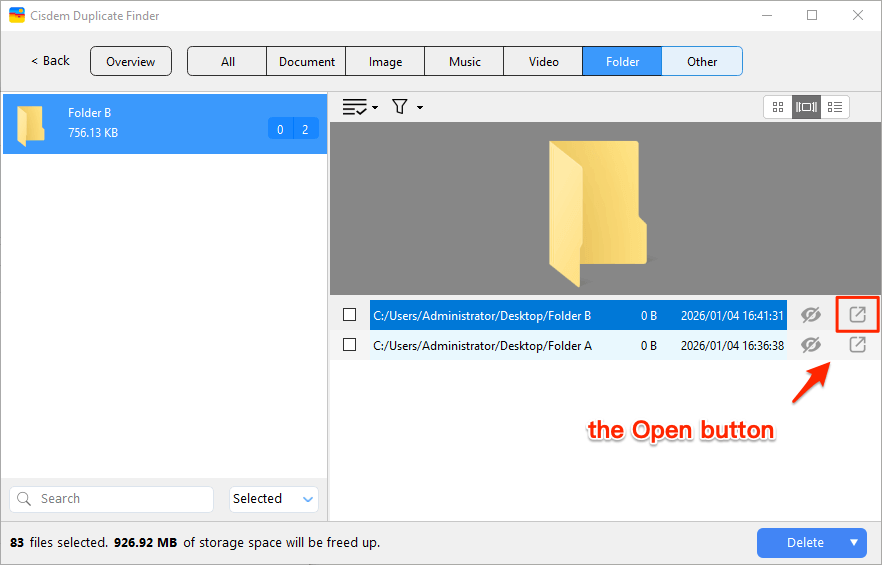
Step 4. Remove unnecessary duplicate folders
In each set of duplicates, select the unnecessary folder(s) for deletion. Alternatively, you can use a selection rule (e.g., Select Oldest) to bulk select folders.
Note for Mac
If you are a Mac user, you will find that those folder duplicates have already been automatically selected. You can make adjustments as you like.
Click Delete in the bottom right corner and confirm it to remove all selected items (by moving them to the Recycle Bin or Trash, depending on your operating system).
Tips
- In step 2, you can exclude folders of your choices from a scan if needed. In Settings > General, add folders, say your backup folders, to the ignore list. This helps add a layer of protection and also speed up scan speed.
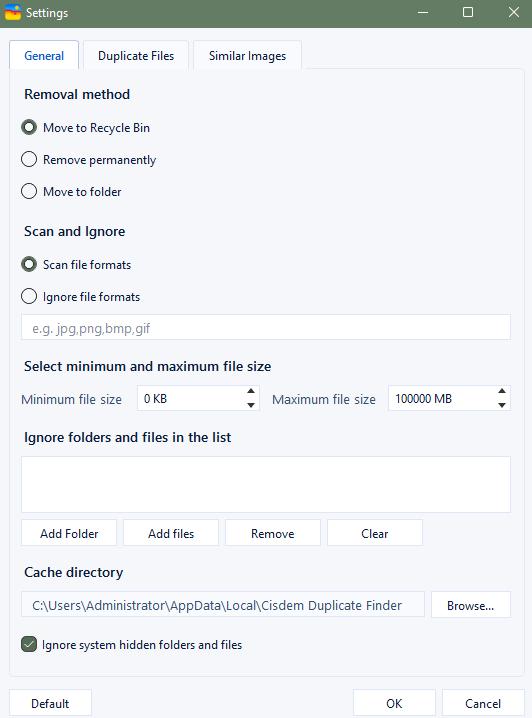
- If you don't want to eliminate those duplicate folders yet but would like to remove them from your computer, you can consider moving them to an external storage device. Connect the device to your computer, select Move to Folder in Settings > General, select the connected device. then click OK. This way, they will moved to this external device after you confirm deletion in step 4.
FAQs
Why do I have duplicate folders on my computer?
There can be various causes. For example, they can be created if you move folders by copying them instead of cutting and pasting them. Repeated importing can also lead to duplicate folders.
Is it safe to delete duplicate folders?
It depends. When it comes to duplicate system folders or app folders, make sure that you leave them as they are. It's safe to delete duplicate folders containing personal files, if you are sure you don't need them anymore.

With a passion for tech and writing, Sarah joined Cisdem, where she focuses on creating articles about using utility tools to enhance file management and simplify contact management.

Adrian Li is Cisdem’s Chief Engineer and serves as the editorial advisor for Duplicate Finder and ContactsMate. His work and insights have been featured in leading tech publications such as Fossbytes, TUAW, Redmond Pie, SafetyDetectives, and BestForAndroid.
Jörg Langer
This article is very detailed. Thank you for sharing such useful information!